The Journey
Matias Fidel Moyano, Julieta Derdoy · anfibio
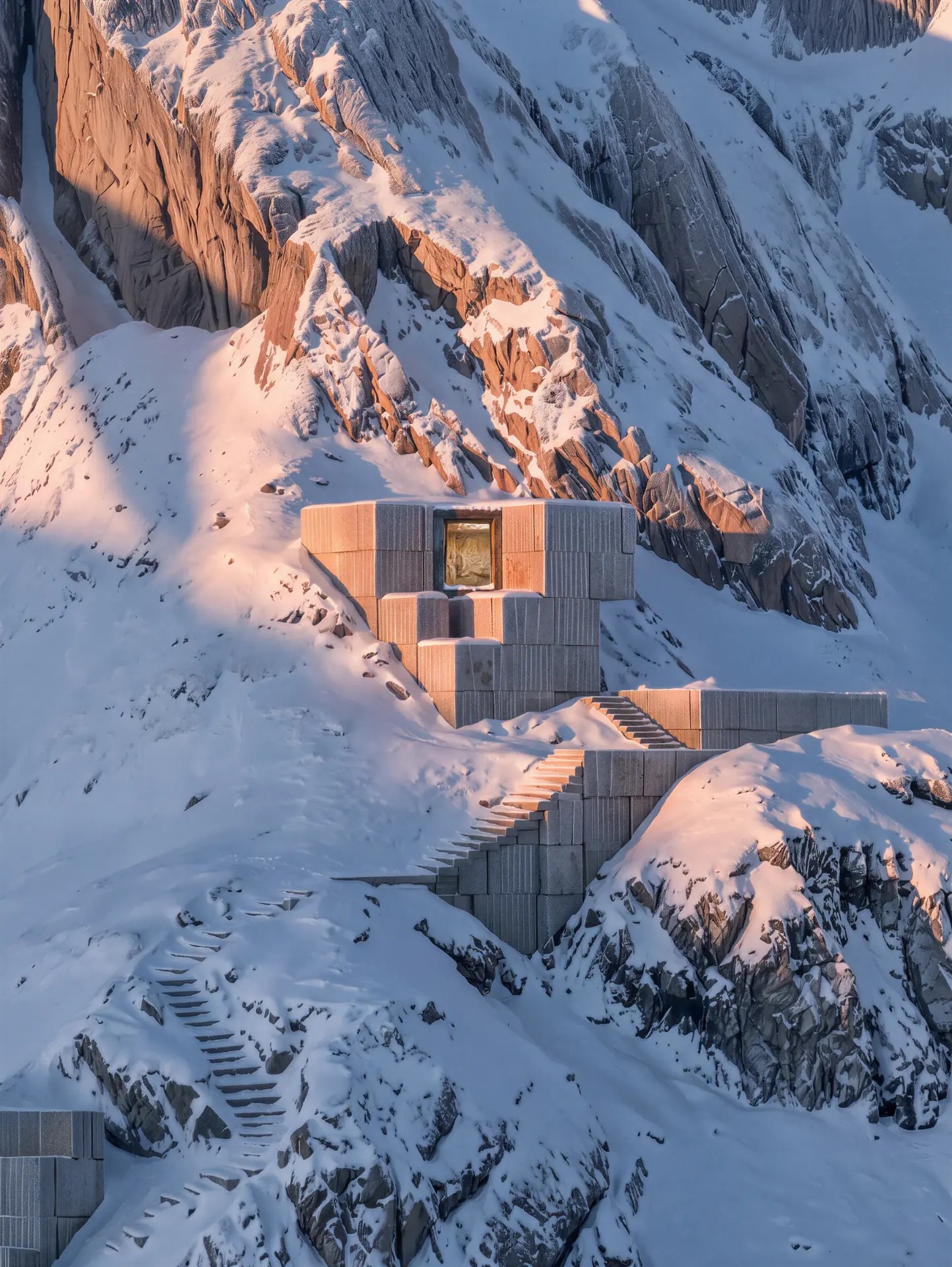
Open the live design canvas to inspect every prompt, variation and decision.
Open canvasJury comments
Cira Oller Tovar: Very strong material exploration and a well-developed design, complemented by strong visuals and engaging video clips with a great sense of cinematography. Mariana Cabugueira: Very good cinematics. Oliver Thomas: There are some really strong images in this one based on strong research. Thea Jiang: Strong design focus with a clearly articulated temporal concept.
In conversation
“When time is limited, ideas organise themselves differently. The pressure of the clock makes us trust our instincts.”
Tell us about yourself, and what brings you to competitions like this.
We are Julieta and Fidel, both architects and the team behind anfibio, a creative studio based in Argentina.
We work on our own explorations and collaborate with other architecture studios, creating visual narratives that explore ideas, atmospheres and ways of experiencing architecture. Our practice moves between architecture and visual experimentation.
What did you design, and what were you trying to communicate?
Our design began by understanding the site and the experience we wanted to create within it. The concept of a constellation emerged as a way of organising the project as a journey: a sequence of elements, each establishing a different relationship with light, water, and the mountain.
Rather than creating a single, continuous experience, we wanted each moment of the journey to feel distinct — sometimes intimate, sometimes open, sometimes immersed in nature. The architecture becomes a way of moving through these changing conditions, creating a diverse sequence of sensations and connections to the place.
How did you approach the timeframe, and where did Gendo fit into the process?
The timeframe felt appropriate for the kind of exploration we wanted to undertake. It gave us enough time to develop a clear concept and translate it into a first architectural scheme, while keeping the process focused and open to exploration.
Gendo became a space for exploration within our workflow — an opportunity to step away from our usual commissions and focus more freely on ideas and atmosphere.
How has your relationship with Gendo developed?
We have used Gendo before, mainly for specific image enhancements and improvements. But through this competition, we discovered another way of using it. We started to see it less as a tool for the final image and more as a space for experimentation throughout the design process. Using it not only to improve what is already designed, but to help us discover and develop the project itself.
What does the recognition mean to you, and what would you do differently next time?
Being finalists meant a lot to us, especially because the project was an opportunity to explore an idea that was very personal to us.
We would have liked to develop the proposal in greater depth. More time would have allowed us to explore the spatial relationships, the sequence of experiences and the connection between each element in more detail.
Anything else you would like to share about GENDO 48?
We find these competitions particularly interesting because when time is limited, ideas organise themselves differently. The pressure of the clock makes us trust our instincts, and sometimes this leads to unexpected answers.
Previous
HØYDE
Next
MOT SOLEN: The Ascent Toward the Sun