SOLLINJEN — Between Water and Light
Jagoda Ciesielska
Open the live design canvas to inspect every prompt, variation and decision.
Open canvasIn conversation
“Architecture should never compete with its surroundings, but rather become part of them.”
Tell us about yourself, and what brings you to competitions like this.
I'm an architect based in Oslo, working internationally across architecture, spatial design and exhibitions. My work often focuses on the relationship between architecture, landscape and its surroundings.
Living in Norway has taught me a lot about the way architecture can be closely connected to nature. I value simple, thoughtful solutions and the idea that architecture should never compete with its surroundings, but rather become part of them.
What did you design, and what were you trying to communicate?
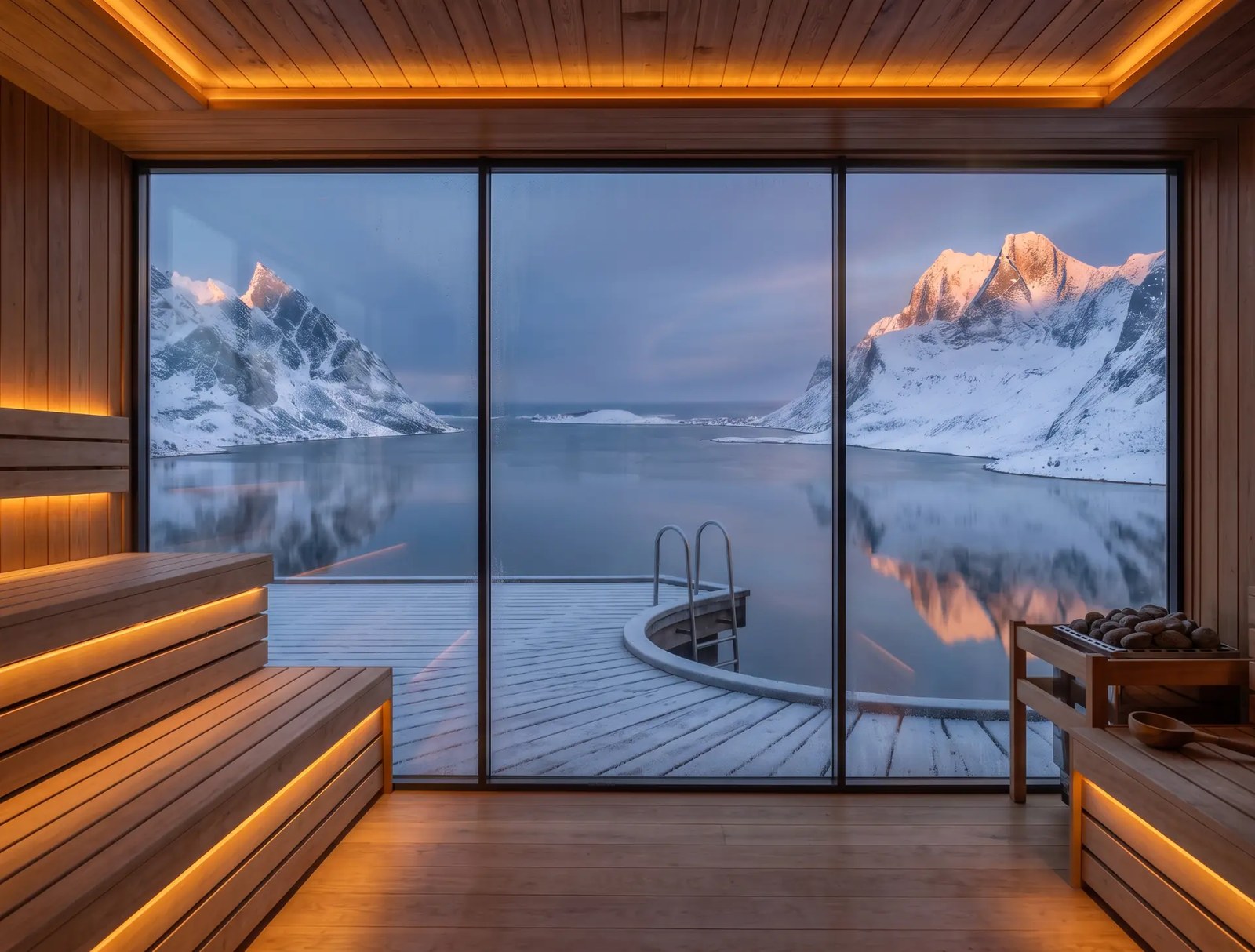
SOLLINJEN — Between Water and Light is built around the relationship between landscape, water and the returning sunlight that defines Soldagen. The project consists of a bathhouse and wellness space close to the fjord, together with a smaller pavilion positioned higher on the slope. The form of the bathhouse is subtly inspired by a whale tail, referencing the marine character of Lofoten.
The project is intended primarily for the local community — a place to gather through shared rituals of sauna and bathing. Natural materials, especially wood, create a warm atmosphere that reflects the simplicity and honesty of Scandinavian architecture.
A path connects the two structures, creating a gradual journey from the water towards the light. This journey is not a single defined route — the landscape invites each person to find their own way to the pavilion above, a place of pause, observation and connection with the returning sun.
How did you approach the timeframe, and where did Gendo fit into the process?
I started by analysing the site in detail to understand the landscape, the different times of day, the movement of the sun and which points within the site would be most important for the experience. This helped me define the relationship between the two buildings and the paths connecting them.
From there, I developed the concept, architecture and key viewpoints in parallel. Gendo became an important part of this process, not only for visualisation but as a tool for exploring the project itself — testing different architectural forms, refining the function of the spaces and understanding how each option could work within the landscape.
How has your relationship with Gendo developed?
GENDO 48 was my first time using Gendo, so the competition became a very direct introduction. Because of the limited timeframe, I had to learn quickly how to use it as part of the design process rather than only as a visualisation tool.
What I valued most was exploring different forms, atmospheres and architectural directions very early, comparing them, and then returning to the design with much clearer decisions.
What does the recognition mean to you, and what would you do differently next time?
Being shortlisted was very meaningful, especially considering the intensity of the format. What made it especially rewarding was knowing that the main idea came through clearly and resonated with the jury. Having the work published gives the project another life beyond the competition.
Next time, I would spend even more time refining the architectural details and the transitions between spaces. One of the biggest challenges is knowing when to stop exploring and start committing to the final direction.
Anything else you would like to share about GENDO 48?
It was intense, but that was also what made it so enjoyable. The limited timeframe pushed me to make decisions quickly, trust the main concept and avoid overthinking every possible direction. I'm very thankful to the Gendo team for creating such an inspiring challenge.
Previous
On the Edge of Trace
Next
HJELL